
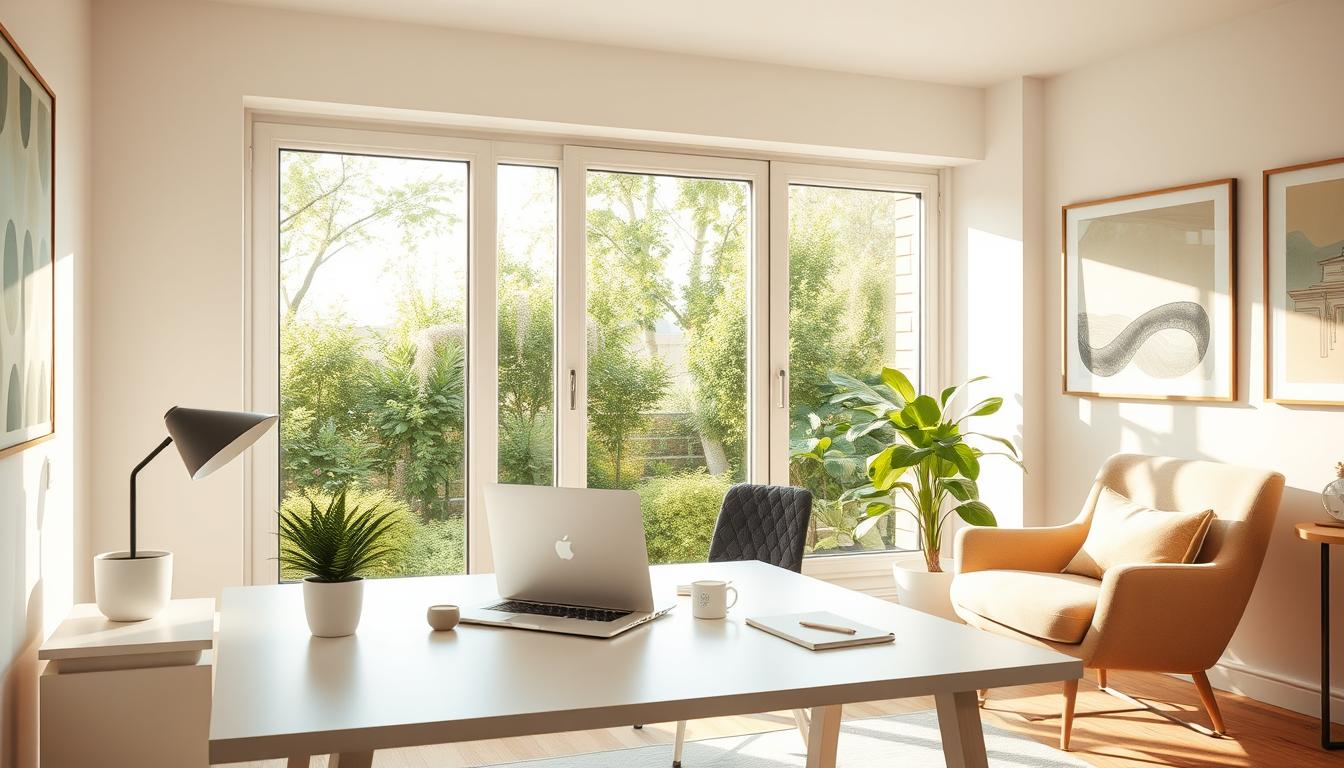
Creating a home office design that fosters productivity and sparks creativity is crucial for achieving success in your work or personal projects.
A well-designed workspace can help you stay focused, motivated, and inspired. To achieve this, it’s essential to consider the psychology behind productive workspaces and assess your specific needs.
By understanding the key principles of effective home office design, you can create a setup that enhances your efficiency and fosters creativity, leading to a more successful and fulfilling work experience.
The Psychology Behind Productive Home Office Spaces
Understanding the psychology behind a productive home office is crucial for achieving work goals. The psychology of a workspace influences how you feel, think, and behave, ultimately impacting your productivity and creativity.
Factors such as color, lighting, and layout play a significant role in this psychological impact. For instance, certain colors can stimulate your mind, while others promote calmness. Blue hues are known to enhance focus, whereas green tones can reduce eye fatigue. Proper lighting can also enhance your focus, with natural light being particularly beneficial for mood and productivity.
A well-organized layout can streamline your workflow, reducing stress and increasing efficiency. Clutter can lead to mental fatigue and decreased productivity, making it essential to maintain an organized workspace. By understanding these psychological aspects, you can design a home office that supports your work goals and fosters creativity.
When designing a home office for focus and creativity, consider the psychological impact of your design choices. By leveraging principles such as color psychology and optimal lighting, you can create a workspace that enhances your productivity and inspires creativity.
Assessing Your Space and Work Requirements
To design an effective home office, you need to evaluate your available space and consider your work style. This involves measuring your room, understanding your work habits, and identifying the necessary furniture and equipment. For small spaces, incorporating small home office design ideas can make a significant difference.
One effective strategy for small home offices is utilizing corner spaces.
Corner Desk Arrangements
Corner desks can help maximize the use of available space, providing a dedicated area for work without cluttering the room. This arrangement can also help in maintaining a clear pathway, enhancing the overall workflow.

In addition to optimizing desk arrangements, implementing home office organization tips is crucial. This includes organizing your workspace to minimize clutter and maximize productivity.
Vertical Storage Options
Using vertical storage solutions, such as wall-mounted shelves or storage units, can keep your workspace organized and clutter-free, contributing to a more efficient work environment.
When selecting furniture, it’s essential to focus on ergonomic home office furniture. Ergonomic chairs, desks, and other equipment can significantly enhance your comfort and productivity. By choosing the right furniture, you can create a workspace that supports your physical wellbeing and promotes effective work.
By carefully assessing your space and work requirements, and applying these strategies, you can create a home office that is both functional and comfortable. This not only enhances your productivity but also contributes to a more enjoyable work experience.
Home Office Design for Productivity: Key Principles
Creating a home office that fosters productivity requires careful consideration of several design principles. A dedicated workspace that is free from distractions is essential for maintaining focus and achieving work goals.
A well-designed home office should incorporate elements that stimulate creativity and promote physical wellbeing. This includes ergonomic furniture, adequate lighting, and a layout that encourages movement and comfort.

To boost productivity, it’s crucial to minimize distractions within the home office. This can be achieved by creating a quiet, private workspace or using noise-cancelling headphones to block out background noise.
In addition to minimizing distractions, a productive home office should also promote physical wellbeing. This can be achieved by ensuring that the workspace is well-lit, with a combination of natural and artificial light sources, and that ergonomic furniture is used to prevent discomfort and injury.
By applying these key principles, individuals can create a home office that not only enhances productivity but also supports overall wellbeing. Effective home office design is centered around creating a space that is both functional and comfortable, allowing individuals to work efficiently and effectively.
Ergonomics: Setting Up for Physical Wellbeing
Ergonomics plays a significant role in home office design, directly impacting your health and work efficiency. A well-designed ergonomic workspace supports your body’s needs, promoting comfort and reducing the risk of physical strain. This is achieved by selecting the right furniture and equipment that encourage good posture and minimize the risk of injury.

One of the key elements of an ergonomic home office is the desk. Standing desk options have gained popularity due to their flexibility, allowing users to switch between sitting and standing throughout the day. This can potentially improve health outcomes and boost productivity.
Standing Desk Options
When choosing a standing desk, consider options that are adjustable, allowing you to easily switch between sitting and standing. Some popular choices include manual and electric standing desks. Manual desks are cost-effective and straightforward, while electric desks offer ease of adjustment with the touch of a button.
Ergonomic Chair Features
An ergonomic chair is another crucial component of an ergonomic workspace. Look for chairs with adjustable height and lumbar support to ensure they fit your body’s needs. Proper lumbar support helps maintain the natural curve of your lower back, reducing strain and discomfort during long working hours.
Incorporating ergonomic principles into your home office design not only enhances your physical wellbeing but also contributes to a more productive and creative work environment. By choosing the right ergonomic home office furniture, you can create a workspace that supports your overall health and workspace design for creativity.
Lighting and Color Psychology for Focus and Energy
The right lighting and color scheme can significantly impact your ability to focus and stay energized while working from home. Lighting, in particular, plays a crucial role in setting the tone for your home office.
Natural light is considered ideal for productivity and mood enhancement. If possible, position your workspace near a window to maximize natural light exposure. However, when natural light is limited, the type of artificial lighting used becomes crucial.

There are three main types of lighting: ambient, task, and accent lighting. Ambient lighting provides overall illumination, task lighting is focused on specific areas where tasks are performed, and accent lighting is used to highlight particular features or areas.
| Lighting Type | Purpose | Effect on Productivity |
|---|---|---|
| Ambient Lighting | Overall Illumination | Sets the general tone, can affect mood and energy levels |
| Task Lighting | Focused on Work Areas | Enhances focus and reduces eye strain |
| Accent Lighting | Highlights Specific Features | Can add visual interest and create a welcoming atmosphere |
Color psychology is another vital aspect of home office design. Different colors can stimulate or calm the mind, influencing productivity and creativity. For instance, blue is often associated with focus and calmness, while green is believed to enhance creativity and balance.
When designing your home office, consider the psychological impact of colors. Cool colors like blue and green can promote focus and calmness, whereas warm colors like orange and red can stimulate energy and creativity.
By thoughtfully combining appropriate lighting and color schemes, you can create a home office environment that not only inspires creativity but also supports your work goals, embodying modern home office design tips for a productive workspace.
Organization Systems That Streamline Your Workflow
To maximize productivity, it’s essential to implement effective organization systems in your home office. An organized workspace not only reduces stress but also enhances your ability to focus on tasks.
One of the key elements of a productive home office setup is categorization. This involves sorting tasks, documents, and office supplies into categories, making it easier to locate what you need when you need it. For instance, you can categorize your documents into pending, completed, and ongoing projects.

Effective storage solutions are also vital for maintaining a clutter-free home office. Here are a few options to consider:
| Storage Solution | Features | Benefits |
|---|---|---|
| File Cabinets | Vertical storage, secure locking | Keeps documents organized and secure |
| Shelving Units | Adjustable shelves, open storage | Provides easy access to frequently used items |
| Desk Organizers | Compact design, multiple compartments | Helps keep your workspace clutter-free |
Implementing these organization systems can significantly improve your workflow. By categorizing tasks and utilizing effective storage solutions, you can create a productive home office setup that enhances your overall productivity.
For small home office design ideas, consider using wall-mounted shelves and compact desk organizers to maximize your space. These solutions not only save space but also contribute to a more organized and efficient work environment.
Technology Setup for Seamless Work
Creating a modern home office involves more than just furniture; it requires a thoughtful technology setup. A well-integrated technology system can significantly enhance productivity and efficiency, making it easier to manage work tasks.
To start, selecting the right computer or laptop is crucial. Consider the processor speed, memory, and storage capacity based on your work requirements. For instance, graphic designers might need more powerful processors and higher storage, while writers might require less powerful machines.

Another critical aspect is the internet connection. A fast and reliable internet service is indispensable for tasks like video conferencing, cloud computing, and accessing online resources. Consider investing in a robust router and a backup internet connection to avoid downtime.
| Technology Component | Considerations | Benefits |
|---|---|---|
| Computer/Laptop | Processor speed, memory, storage | Efficient task management, multitasking |
| Internet Connection | Speed, reliability, backup options | Seamless communication, cloud access, reduced downtime |
| Printer/Scanner | Quality, multifunctionality, connectivity | Convenience, versatility, productivity |
Other necessary tools include a printer/scanner, external monitors, and ergonomic input devices like keyboards and mice. These components not only enhance productivity but also contribute to a comfortable working environment.
By focusing on these key technology elements, you can create a home office that is not only modern but also highly functional. This setup will help in boosting productivity at home office, making it easier to achieve work goals.
Incorporating modern home office design tips, such as a well-planned technology setup, is essential for home office design for productivity. It’s about creating a space that supports your work style and enhances your ability to work efficiently.
Personalizing Your Space for Creative Inspiration
Personalizing your workspace is a crucial step in creating an environment that fosters creativity and motivation. By incorporating elements that reflect your personality, interests, and work style, you can transform your home office into a haven that inspires new ideas and enhances productivity.
One effective way to personalize your home office is through creative decor choices. Consider adding artwork, plants, or sculptures that resonate with your personal taste and stimulate your creativity. For instance, a vibrant painting or a sculpture that reflects your cultural heritage can add a unique touch to your workspace, making it more inviting and inspiring.

In addition to decor, the layout and organization of your home office play a significant role in fostering creativity. Implementing a workspace design for creativity involves arranging your furniture and tools in a way that promotes comfort and efficiency. For example, using ergonomic furniture and ensuring that your workspace is well-lit can significantly enhance your ability to focus and generate new ideas.
Furthermore, incorporating personal mementos and motivational quotes into your home office decor can serve as a constant source of inspiration. Displaying achievements, awards, or meaningful objects can boost your morale and encourage you to strive for excellence. By thoughtfully personalizing your workspace, you can create an environment that not only reflects your identity but also nurtures your creative potential.
Ultimately, the key to a creatively inspiring home office lies in striking a balance between functionality and personal expression. By merging practical workspace design with elements that inspire and motivate you, you can create a home office that is both productive and creatively stimulating.
Conclusion: Creating Your Ideal Productive Home Office
Designing a home office that boosts productivity and creativity requires careful planning and a deep understanding of your work needs and preferences. By applying the principles discussed in this article, you can create a productive home office setup that inspires creativity and supports your overall wellbeing.
To achieve this, focus on home office design for productivity by incorporating elements that promote comfort, organization, and focus. This includes setting up an ergonomic workspace, utilizing effective lighting and color schemes, and implementing organization systems that streamline your workflow.
When designing a home office for focus, consider the technology and tools you need to stay efficient and motivated. Personalizing your space with inspiring elements can also enhance your creativity and productivity. By following these guidelines, you can create a home office that meets your unique needs and fosters a productive work environment.


