
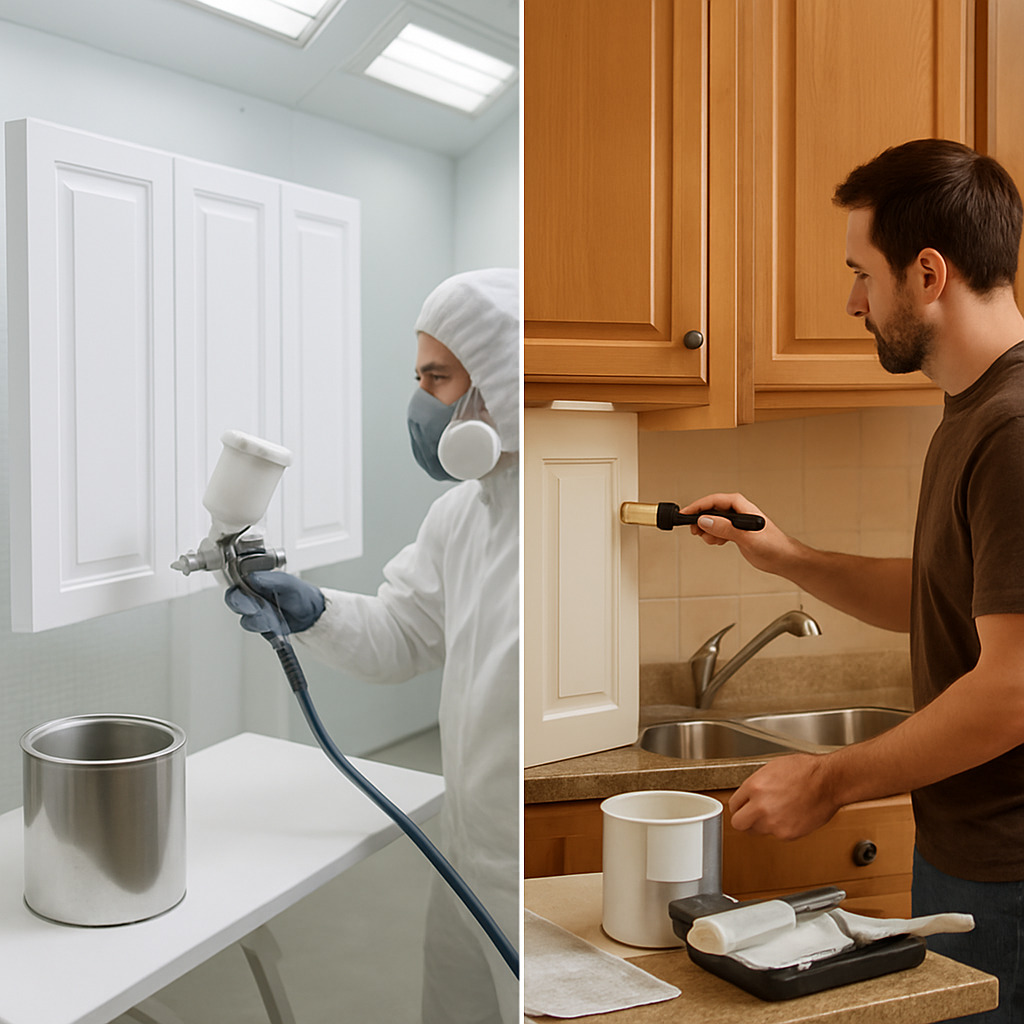
After painting kitchen cabinets for over 20 years, I’ve learned that using the right paint is absolutely key. The right choice can completely transform your kitchen or create a costly mess. When you paint kitchen cabinets, choosing the best product is crucial for achieving a professional, long-lasting finish.
Professional spray finishes are top-notch, but most homeowners can’t use them. I’ll share tips on painting cabinets that look great and last long.
Professional Spraying vs. DIY Painting: What’s Realistic?

Professionally sprayed finishes are the best, but they’re not for most homeowners. The good news? You can get great results with brushes and rollers if you use the right products and techniques.
Spray equipment gives a perfect finish, but it’s hard to set up and use. I’ll focus on products that work well with DIY methods.
“The difference between a good cabinet paint job and a great one isn’t just the product—it’s the preparation and application technique. Even the best paint can’t compensate for poor prep work.”
Preparation: The Foundation of a Perfect Cabinet Finish
Before we talk about paint, let’s cover the prep steps that matter most.
Removing Hardware and Doors

Take off all cabinet doors, drawers, and hardware. Use numbered tape or bags to keep everything organized. This makes it easier to paint all surfaces.
Repairing Damage Before You Paint Kitchen Cabinets
Before you even think about opening a paint can, repairing damage to your kitchen cabinets is essential. Cracks, chips, peeling paint, and loose hinges may seem minor, but they can ruin your final results if left untreated. A smooth, professional-looking finish starts with a solid surface. Whether you’re dealing with water damage, dents, or worn-out corners, taking the time to properly repair cabinet damage will ensure your paint adheres evenly and lasts for years.
Sanding Properly

Sanding is essential for a smooth finish. Start with a 120 grit, then 180, then 220. Always sand with the grain and wear a mask. Use a shop vacuum to clean up dust.
Safety Warning: Old paint might have lead (specially if it was applied before 1978 in the United States). Always protect yourself when sanding and contain dust well.
Best Primers for Kitchen Cabinets
A quality primer creates the foundation for your paint to adhere properly and last for years. After decades of experience, I’ve found these primers deliver the best results for kitchen cabinets:
Zinsser B-I-N Shellac-Based Primer

This is my go-to primer for most cabinet projects. Its shellac base creates an exceptional bond to almost any surface and blocks stains completely. It dries incredibly fast (30 minutes) and sands to a powder-smooth finish. The downside? It has a strong odor during application, but this dissipates quickly.
INSL-X Stix Waterborne Bonding Primer
For difficult surfaces like laminate or glossy cabinets, this acrylic-urethane primer creates an exceptional bond. It has minimal odor and provides excellent adhesion to hard-to-stick surfaces. It requires a longer dry time than shellac primers but delivers outstanding results.
Best Paints for Kitchen Cabinets
Choosing the right paint is key for your cabinets’ look and durability. Here are the top picks for professional results:
Sherwin Williams Emerald Urethane Trim Enamel

This is currently my top recommendation for kitchen cabinets. It self-levels beautifully, creating a finish so smooth it looks sprayed. It’s incredibly durable against kitchen wear and tear, and it resists yellowing over time. Available in satin, semi-gloss, and gloss finishes.
“I recently used Emerald by Sherwin Williams and I have to say it is the best enamel I’ve ever used. It laid out so flat it looked like it had been sprayed.”
Benjamin Moore Advance

This water-based alkyd hybrid offers the best of both worlds: the flow and hardness of oil-based paint with the low VOC and easy cleanup of latex. It has an extended open time that allows the paint to self-level beautifully, minimizing brush marks. The downside is a longer dry time between coats (16 hours).
Rustoleum Cabinet Transformations Kit

This kit is perfect for beginners. It includes deglosser, bond coat, glaze, and top coat. The acrylic formula is durable against chipping and scratching. It’s a bit pricey but easy to use.
“When the counter top installers came to install the top, they commented ‘Why did you take out the solid wood cabinets?’ I told them that ‘I didn’t, I refinished them’—they thought I had bought new cabinets.”
Choosing the Right Paint Finish for Kitchen Cabinets

The finish you choose affects both appearance and durability. For kitchen cabinets, I recommend:
| Finish | Durability | Cleanability | Appearance | Best For |
| Satin | Good | Good | Subtle sheen, hides imperfections | Traditional or farmhouse styles |
| Semi-Gloss | Excellent | Excellent | Noticeable sheen, reflects light | Most kitchens (my top recommendation) |
| High-Gloss | Superior | Superior | Mirror-like finish, shows imperfections | Modern, contemporary kitchens |
Pro Tip: Semi-gloss is the sweet spot for most kitchen cabinets. It’s highly durable and cleanable while not highlighting every imperfection like high-gloss can.
Professional Application Techniques
Even the best paint products need proper application techniques to achieve professional results.
Brushes and Tools

Invest in quality tools—they make a tremendous difference in your final result:
- Purdy XL Cub or Purdy Clearcut angled brushes (2-2.5 inch) for detailed work
- High-density foam rollers (4-6 inch) for flat surfaces
- 220-grit sandpaper for between-coat sanding
- Tack cloths for dust removal
- Paint conditioner like Floetrol for oil-based paints or Penetrol for water-based paints
Painting Cabinet Boxes

Start with the cabinet boxes, working from the inside out:
- Begin with the interior if you’re painting it (one coat is usually sufficient)
- Move to the sides and top of the cabinet frame
- Paint the face frame last, using long, smooth strokes in the direction of the wood grain
- Allow proper drying time between coats (follow manufacturer’s instructions)
Painting Cabinet Doors

For doors, create a proper painting setup:
- Place doors on 2x4s resting on sawhorses, supported by small sticks for elevation
- Paint the back side first, being careful not to let paint run down the edges
- Once completely dry, flip and paint the front side
- For paneled doors, paint the inset panels first, then the rails and stiles (frame)
- Always brush in the direction of the wood grain with long, smooth strokes
Pro Tip: Apply multiple thin coats rather than one thick coat. Thin coats dry more evenly, create fewer brush marks, and provide a more durable finish.
Staining Cabinets: An Alternative Approach

If you prefer the natural wood look, staining is an excellent alternative to painting. However, it requires different products and techniques:
Pros of Staining
- Highlights natural wood grain and character
- Can be easier to touch up than paint
- Provides a warm, traditional look
- Generally more forgiving of application errors
Cons of Staining
- Requires wood in good condition (not good for previously painted cabinets)
- Less effective at hiding imperfections
- Limited color options compared to paint
- Requires more thorough sanding preparation
For staining cabinets, I recommend Minwax Penetrating Stain followed by 2-3 coats of oil-based polyurethane for durability. The key to a beautiful stain finish is thorough sanding (up to 220 grit) and applying the stain evenly, wiping off excess before it dries.
Important: Avoid “all-in-one” stain and polyurethane products for cabinets. They create a murky finish that obscures the wood’s natural beauty. Separate stain and clear coat products allow the wood grain to shine through clearly.
Frequently Asked Questions
Can I paint over stained cabinets without sanding?
While there are “no-sand” primers on the market, I don’t recommend skipping sanding for kitchen cabinets. At minimum, a light scuff sanding with 220-grit paper creates the mechanical tooth needed for proper adhesion. For the most durable finish on stained cabinets, thorough sanding and priming with shellac-based primer is essential.
How long will painted cabinets last?
With proper preparation and quality products, painted cabinets can last 8-10 years before showing significant wear. High-traffic areas like drawer pulls and frequently used doors may show wear sooner. Using semi-gloss or gloss finishes and proper cleaning methods (mild soap, not abrasive cleaners) will extend the life of your painted cabinets.
What’s the best paint for laminate cabinets?
Laminate cabinets require special consideration. Start with a high-adhesion primer like INSL-X Stix or Zinsser B-I-N. For the topcoat, Benjamin Moore Advance or Sherwin Williams Emerald Urethane work well on laminate when properly primed. Never use standard latex paint on laminate without proper primer—it will peel quickly.
Oil-based vs. water-based paint: which is better?
Traditionally, oil-based paints were superior for cabinets due to their hardness and self-leveling properties. However, modern water-based alkyd hybrids like Benjamin Moore Advance and Sherwin Williams Emerald Urethane offer the best of both worlds: the durability and flow of oil with easier cleanup and lower VOCs. These newer formulations have largely replaced traditional oil-based paints in my professional recommendations.
Recommended Products and Resources
Essential Cabinet Painting Supplies
These are the products I personally use and recommend after decades of cabinet painting experience:
Sherwin Williams Emerald Urethane
Primers
- Zinsser B-I-N Shellac-Based Primer
- INSL-X Stix Waterborne Bonding Primer
- Kilz Premium High-Hide Primer
Paints
- Sherwin Williams Emerald Urethane
- Benjamin Moore Advance
- Rustoleum Cabinet Transformations Kit
Tools
- Purdy Clearcut Angled Brushes
- Wooster Foam Rollers (High-Density)
- 3M Sandpaper (120, 180, 220 grit)
Conclusion: Creating a Professional Finish

After painting cabinets for 20 years, I’ve found three key factors for a pro finish: prep, quality products, and right application. The best paint for cabinets balances durability and ease of use. I recommend Sherwin Williams Emerald Urethane Trim Enamel and Benjamin Moore Advance.
No paint can fix poor prep. Clean, repair, sand, and prime well before painting. Use quality brushes and apply thin coats for best results.
With the right products and patience, your DIY project can look pro. Remember, “One great paint job can change the world. Take it one paint stroke at a time.”
By: Michael Turner
(Michael Turner has over 20 years of experience in painting and home renovation, sharing expert tips for professional and long-lasting results.)


