
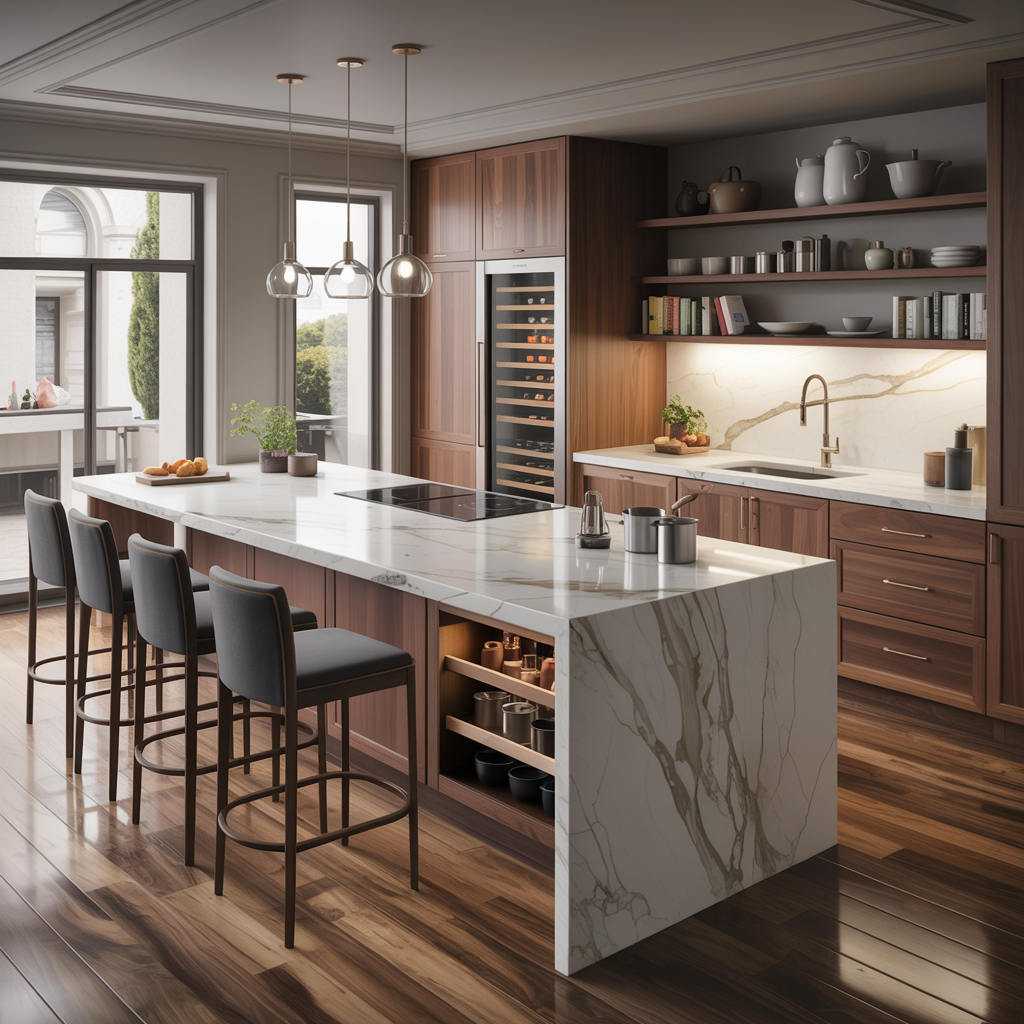
Are you dreaming of a new kitchen island? You’re not alone. Many homeowners are adding these versatile features to their homes. They blend practicality with style. Knowing the average kitchen island cost is key for planning your renovation.
The price of a kitchen island changes a lot. It depends on size, material, and features. Whether you want a simple design or a fully equipped workspace, understanding what affects the kitchen island price is important. It helps you make smart choices.
This guide will cover the main points. It will give you a clear idea of what to expect when budgeting for your new kitchen island.
Understanding Kitchen Island Basics
Before diving into the world of kitchen islands, it’s essential to grasp their fundamental aspects. A kitchen island is more than just an additional countertop; it’s a multifunctional element that can enhance your kitchen’s functionality and aesthetic appeal.

Key Features of Kitchen Islands include additional storage, countertop space, and sometimes appliances or sinks. The size and layout of your kitchen island can significantly impact its functionality. Larger islands offer more space for these features, but they also require more floor space.
The materials used for your kitchen island are key to its cost. You can choose from granite, quartz, and wood. Each has its own price and benefits. For example, granite is tough but pricey, while wood is cozy and might cost less.
Knowing how kitchen island size and cost relate is important. Bigger islands need more stuff and labor, raising the price. Smaller ones are cheaper but might not do as much.
Think about features, size, and materials when planning your island. This way, you can set a good budget. Whether you want a simple counter or a full kitchen center, knowing these basics helps you choose wisely.
Average Kitchen Island Cost Overview
The cost of a kitchen island can change a lot. This depends on its size, the materials used, and its features. Knowing these points helps homeowners plan their budget better.
The price of a kitchen island can be anywhere from $3,000 to $15,000 or more. This range varies with the design’s complexity and the materials chosen. A simple island with laminate countertops and standard cabinets is cheaper. But, a custom island with granite or quartz countertops and unique cabinetry costs more.

A kitchen island cost breakdown includes materials, labor, and extra features like plumbing or outlets. The cost of materials is a big part, especially the countertop. For example, a granite countertop island costs more than one with laminate.
Other things that affect the cost of a kitchen island are its size and design complexity. Islands with special features like sinks or stoves also cost more. Larger or more complex designs need more materials and work, raising the price.
To get a precise estimate for a kitchen island, think about all these points. It’s also wise to talk to experts. They can give you a detailed quote based on what you need and want.
Factors That Influence Kitchen Island Cost
Understanding the factors that affect kitchen island costs is crucial for making informed decisions during the planning process. The cost of a kitchen island can vary widely based on several key elements.
Countertop Materials
The choice of countertop material significantly impacts the cost. Options range from budget-friendly laminate to high-end granite or quartz. For instance, granite countertops can cost between $50 to $100 per square foot, while laminate countertops are generally more affordable, ranging from $10 to $30 per square foot.
- Granite: Durable and aesthetically pleasing, but can be expensive.
- Quartz: Engineered stone offering consistency and durability.
- Laminate: Budget-friendly with a wide range of designs.
Cabinet Materials
Cabinet materials also play a crucial role in determining the overall cost. Solid wood cabinets are typically more expensive than those made from engineered wood or MDF. The cost can range from $500 to $5,000 or more, depending on the material and construction quality.

Storage Options
Storage options can really change the cost. Islands with drawers, cabinets, or shelves cost more. Custom storage that fits your needs also adds to the price.
Built-in Appliances
Built-in appliances like sinks, cooktops, or wine coolers raise the cost. They need extra plumbing, electrical work, or ventilation. This adds to the total cost.
Seating Capacity
The size of a kitchen island, like a breakfast bar or seating area, affects the price. Islands with seating need more materials for the countertop. They might also need stronger support.
Knowing these details helps homeowners plan their kitchen island project better. They can mix their wants with their budget. Every part, from the countertop to the seating, adds to the cost. This way, they can make choices that fit their needs and budget.
Kitchen Island Cost Breakdown by Materials
Choosing the right material for your kitchen island is key. It affects the look, durability, and how well it works.
Kitchen islands come in three main types: natural stone, engineered materials, and affordable options. Each has its own look and price tag.
Natural Stone Options
Natural stone, such as granite and marble, is a popular choice for kitchen islands due to its durability and luxurious appearance. However, it comes at a higher cost.
- Granite: Known for its durability, granite can range from $50 to $100 per square foot.
- Marble: Marble offers a luxurious look but is more expensive, ranging from $75 to $150 per square foot.
Engineered Materials
Engineered materials, like quartz, offer a balance between durability and cost. Quartz is a popular choice due to its low maintenance and wide range of designs.
- Quartz: Prices vary from $40 to $100 per square foot, depending on the brand and quality.
Budget-Friendly Alternatives
For those on a tighter budget, materials like laminate and butcher block are more affordable options.
- Laminate: Laminate countertops are cost-effective, priced between $10 to $30 per square foot.
- Butcher Block: Butcher block offers a warm, natural look and is generally priced between $20 to $50 per square foot.
To give you a clearer picture, here’s a comparison of the costs associated with different materials:
| Material | Cost per Square Foot | Durability |
|---|---|---|
| Granite | $50-$100 | High |
| Marble | $75-$150 | High |
| Quartz | $40-$100 | High |
| Laminate | $10-$30 | Medium |
| Butcher Block | $20-$50 | Medium |
As Benjamin Moore, a renowned expert in home decor, once said, “The right material can transform a kitchen island from a mere fixture to a statement piece.” This highlights the importance of choosing the right material for your kitchen island.

Kitchen Island Cost by Grade
The grade of a kitchen island is a significant determinant of its cost, with high-end and custom islands commanding premium prices. Kitchen islands are available in various grades, reflecting differences in materials, craftsmanship, and features.
Understanding Kitchen Island Grades
Kitchen islands can be broadly categorized into three main grades: standard, high-end, and custom. Each grade reflects a different level of quality, design complexity, and functionality.
- Standard Grade: These islands are mass-produced and made from more affordable materials. They are ideal for homeowners on a budget.
- High-End Grade: Featuring premium materials and sophisticated designs, high-end kitchen islands are perfect for those seeking luxury and durability.
- Custom Grade: Tailor-made to fit specific kitchen layouts and design preferences, custom kitchen islands offer unique features and superior craftsmanship.
The cost of a kitchen island is directly influenced by its grade. To illustrate this, consider the following table that breaks down the average costs associated with different grades of kitchen islands:
| Grade | Average Cost | Materials | Features |
|---|---|---|---|
| Standard | $800 – $2,000 | Engineered wood, laminate | Basic storage, simple design |
| High-End | $3,000 – $6,000 | Solid wood, granite countertops | Advanced storage, sophisticated design |
| Custom | $5,000 – $10,000+ | Premium materials, bespoke design | Unique features, high-quality craftsmanship |

When selecting a kitchen island, it’s essential to balance your budget with your needs and preferences. Whether you opt for a standard, high-end, or custom island, understanding the associated costs will help you make an informed decision.
By considering the grade of the kitchen island and its implications on cost, homeowners can better plan their kitchen renovation, ensuring that their new island not only enhances the aesthetic appeal of their kitchen but also provides the functionality they need.
Prefab vs. Custom Kitchen Islands: Cost Comparison
Kitchen island choices range from prefab to custom, each with its own kitchen island cost considerations and advantages. When deciding between these options, it’s essential to understand the cost implications to make an informed decision that fits your budget and meets your kitchen needs.
Prefab kitchen islands are often more budget-friendly, with kitchen island cost ranging from $100 to $1,000, depending on the material and size. On the other hand, custom kitchen islands can be more expensive, with prices starting at $1,500 and potentially exceeding $5,000, due to the tailored design and high-quality materials used.

Store-bought or prefab kitchen islands are readily available at home improvement stores and online retailers. These islands are mass-produced and come in standard sizes, making them generally more affordable. The cost of store-bought kitchen islands can vary based on factors like material, size, and brand. For instance, a basic IKEA kitchen island might cost around $100, while a higher-end model from a specialty store could cost up to $1,000.
Semi-Custom Solutions
Semi-custom kitchen islands offer a middle ground between prefab and fully custom designs. These islands are made to order but still use standard components, allowing for some customization while keeping costs in check. Semi-custom solutions can range from $800 to $3,000, depending on the level of customization and materials chosen. This option is ideal for homeowners who want a tailored look without the high cost of a fully custom kitchen island.
In conclusion, the choice between prefab and custom kitchen islands depends on your budget, design preferences, and kitchen needs. Understanding the cost differences between these options can help you make a decision that balances cost, quality, and functionality.
Additional Costs to Consider
The total cost of owning a kitchen island includes more than just the purchase price; several additional features can add to the expense. When installing a kitchen island, it’s essential to consider these extra costs to avoid budget surprises.
Several factors can increase the cost of a kitchen island. Understanding these can help you plan your budget more effectively.
Adding a Sink
Incorporating a sink into your kitchen island can enhance its functionality but also increases the kitchen island cost. The price includes the sink itself, plumbing modifications, and potentially the cost of hiring a professional plumber. Expect to pay between $500 to $2,000 extra for this feature, depending on the complexity of the installation and the type of sink chosen.
Adding Outlets and Lighting
Adding outlets and lighting to your kitchen island not only improves its usability but also its safety. The cost varies based on the type of outlets and lighting fixtures you choose. Under-cabinet lighting and USB outlets are popular choices. The installation cost can range from $100 to $500, depending on the complexity of the electrical work required.

To manage these additional costs effectively, consider the following tips:
- Plan your kitchen island’s design and features carefully to avoid last-minute changes.
- Choose materials and fixtures that fit your budget but also meet your needs.
- Hire professionals for tasks that are beyond your DIY capabilities, such as plumbing and electrical work.
By understanding these additional costs, you can better plan your kitchen island project and ensure it fits within your budget.
Cost-Saving Alternatives to Full Kitchen Islands
If a full kitchen island is out of your budget, consider these affordable alternatives that still bring functionality and style to your kitchen. One of the most popular options is a rolling kitchen cart, which offers the flexibility of being easily moved around as needed.
Rolling kitchen carts are not only budget-friendly, with a much lower kitchen island cost—typically ranging from $50 to $200—but they also provide additional storage and counter space. They come in various designs, from simple utility carts to more elaborate ones with drawers and cabinets. When choosing a rolling cart, consider the material and construction to ensure it fits your kitchen’s style and durability needs.
Key Considerations for Rolling Kitchen Carts:
- Size and scale in relation to your kitchen
- Material and finish to match your kitchen decor
- Additional features like drawers, shelves, or a built-in trash can
Another cost-saving alternative
Another cost-saving alternative is a butcher block or portable island on wheels. These units are often less expensive than custom kitchen islands and can be found at home goods stores or online. They offer a compact solution for additional prep space and can be easily stored away when not in use.
| Alternative | Cost Range | Features |
|---|---|---|
| Rolling Kitchen Cart | $50-$200 | Additional storage, counter space, portable |
| Portable Island on Wheels | $100-$500 | Compact, additional prep space, easy to store |
| Butcher Block Cart | $80-$300 | Durable surface, additional counter space |
For those who enjoy DIY projects, repurposing an old dresser or shelving unit into a kitchen island can be a creative and cost-effective solution. This approach not only saves money but also adds a unique touch to your kitchen.
“Repurposing old furniture into functional kitchen pieces is not only eco-friendly but also allows for a one-of-a-kind design that adds character to your home.” –
A Home Decor Expert

By exploring these alternatives, homeowners can achieve their kitchen goals without the hefty price tag associated with full kitchen islands. Whether you opt for a rolling cart, a portable island, or a DIY project, there’s a cost-saving solution to fit your needs and budget.
Making the Right Investment: Balancing Cost, Quality, and Needs
If a full kitchen island is out of your budget, consider these affordable alternatives that still bring functionality and style to your kitchen. One of the most popular options is a rolling kitchen cart, which offers the flexibility of being easily moved around as needed.
Rolling kitchen carts are not only budget-friendly, significantly lowering the overall kitchen island cost with prices ranging from $50 to $200, but they also provide additional storage and counter space. They come in various designs, from simple utility carts to more elaborate ones with drawers and cabinets. When choosing a rolling cart, consider the material and construction to ensure it fits your kitchen’s style and durability needs.
FAQ
What is the average cost of a kitchen island?
Kitchen islands can cost between $3,000 and $5,000. This price depends on size, materials, and features. Prices can go up to $10,000 for custom islands.
What factors influence the cost of a kitchen island?
Many things affect the cost of a kitchen island. Materials, size, storage, and appliances are key. Countertops like granite and cabinets also play a big role.
How much does a custom kitchen island cost?
Custom islands can cost from $5,000 to $15,000. The price goes up with design complexity and material quality. High-end ones can reach $20,000.
What is the cost difference between prefab and custom kitchen islands?
Prefab islands are cheaper, costing $1,000 to $5,000. Custom ones can be $5,000 to $15,000. It depends on customization and materials.
How much does it cost to add a sink to a kitchen island?
Adding a sink can cost $1,000 to $3,000. It depends on the sink type and plumbing needs. Running new water lines and installing a disposal add to the cost.
What are some cost-saving alternatives to full kitchen islands?
Rolling carts are cheaper, costing $100 to $1,000. They offer counter space and storage without the cost of a fixed island.
How much does it cost to install a kitchen island?
Installation costs vary. It depends on the job’s complexity, location, and installer’s rates. On average, it’s $500 to $2,000.
What is the cost of a high-end kitchen island?
High-end kitchen islands cost $10,000 to $20,000. They have premium materials, advanced features, and custom designs. Expect high-end countertops and sophisticated systems.


