
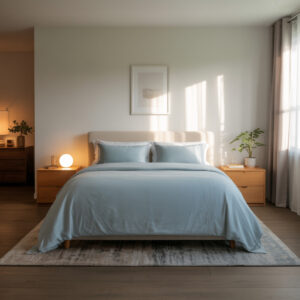
Creating a calm bedroom is key for a good night’s sleep. A well-designed bedroom can be your own personal sanctuary. It helps you relax and feel refreshed. If you want to make your bedroom a place for better sleep, you’re in the right spot. A peaceful bedroom is not just a luxury; it’s essential for your health.
By adding relaxing bedroom decor and smart design, you can turn your bedroom into a place for deep relaxation and restful sleep. This article will show you how to create a calming space that improves your sleep quality.
Key Takeaways
- Understand the importance of a calming bedroom environment for better sleep.
- Discover simple yet effective ways to create a relaxing bedroom atmosphere.
- Learn how to choose the right decor to promote a restful night’s sleep.
- Explore design elements that can enhance sleep quality.
- Find out how to transform your bedroom into a serene retreat.
The Science of Sleep and Your Bedroom Environment
Learning about sleep science and how it relates to bedroom design can change our sleep habits. The bedroom is key to our sleep quality. Its design greatly affects how well we sleep.
Why Creating a Calming Bedroom Matters
A calm bedroom is essential for good sleep. A peaceful environment reduces stress and anxiety. This makes it easier to fall and stay asleep.
A well-designed bedroom can greatly improve sleep. It creates a relaxing space that promotes rest.

The Link Between Sleep Quality and Interior Design
Design elements like colors, lighting, and furniture impact sleep quality. A sleep-friendly design uses calming colors and reduces clutter. It also makes sure the bed is comfy and inviting.
How Your Surroundings Affect Sleep Hormones
Your bedroom’s surroundings can change sleep hormone levels, like melatonin. Natural light and darkness affect your body’s clock and hormone production. A bedroom design for better sleep considers these to support natural sleep cycles.
Understanding sleep science and bedroom design helps improve sleep quality. Creating a sleep-friendly space leads to better rest and well-being.
10 Calming Bedroom Ideas That Transform Sleep Quality
Turning your bedroom into a peaceful space can greatly improve your sleep. A well-designed bedroom is more than just pretty. It’s a place that helps you relax and sleep well.
Quick-Win Design Changes for Immediate Results
Making a few simple changes can make your bedroom feel cozier right away. Here are some quick ideas:
- Switch to soft, warm lighting to create a cozy atmosphere.
- Use calming colors on walls and bedding to promote relaxation.
- Minimize clutter by storing items out of sight.

Balancing Functionality with Tranquility
Finding the right mix of function and calm is key for a good night’s sleep. Here are some tips:
- Invest in multi-functional furniture, like storage beds.
- Keep essential items within easy reach but out of sight.
- Use calming textiles like cotton or linen for bedding.
To show how to balance function and calm, look at this table:
| Functional Element | Tranquil Element | Benefit |
|---|---|---|
| Storage Bed | Soft Lighting | Reduces clutter, promotes relaxation |
| Minimalist Furniture | Calming Colors | Creates a serene environment |
| Organizational Tools | Soothing Textures | Enhances functionality, reduces stress |
Creating a Bedroom Retreat on Any Budget
You don’t need to spend a lot to make a cozy bedroom. Here are some affordable ideas:
- Repurpose existing furniture with a fresh coat of paint.
- Shop for second-hand decor items.
- DIY calming decor, like a macrame wall hanging.
With these ideas, you can turn your bedroom into a peaceful retreat, no matter your budget.
Color Psychology for Restful Sleep
Color psychology is key in designing a bedroom for sleep. The colors around us can change our mood and sleep quality. Choosing the right colors can make our bedroom calm, helping us sleep better.
Best Calm-Inducing Color Palettes
Soft, muted colors are best for relaxation. Shades of blue like light sky blue or powder blue are calming. Gentle greens, creamy whites, and soft grays also create a peaceful sleep environment.

How to Use Accent Colors Without Disrupting Sleep
Accent colors can make your bedroom unique without affecting sleep. Choose colors that match your main color scheme. For example, light blue walls can be paired with deeper blue or white accents. Keep it balanced to avoid bright or bold colors.
Wall Colors vs. Décor Colors
Wall and décor colors should blend well. Walls set the base, and décor can match or contrast. Start with wall colors and pick décor that complements them. For instance, gray walls look great with gray and white bedding and curtains.
Calm Bedroom Colors That Promote Relaxation
Effective calm colors include soft blues, pale greens, and neutrals like beige or cream. These colors are calming and reduce stress. Using these colors in your bedroom design can create a peaceful space for better sleep.
Lighting Design for Better Sleep
Good lighting design can really help you sleep better by making your bedroom calm. The right lighting can help your body get ready for sleep. It’s all about creating a cozy atmosphere.
Natural Light Management Techniques
It’s key to manage natural light to keep your sleep schedule on track. Open curtains during the day to let in sunlight. This helps your body know when it’s daytime.
As night falls, close curtains to block out light. This tells your body it’s time to sleep. Blackout curtains or shades are great for keeping your room dark.

Artificial Lighting Solutions
Artificial light can help make your bedroom feel cozy. Use warm-toned lamps to create a soothing mood. These can be table lamps or floor lamps with soft shades.
Think about the color of your lighting too. Cool-toned lights can make it hard to fall asleep. Warm-toned lights, on the other hand, help you relax and sleep better.
Smart Lighting Systems for Sleep
Smart lighting systems are easy to use and effective. They can change the light’s color and brightness to help you sleep. This helps your body get into a natural sleep cycle.
“Smart lighting can help create a sleep-friendly environment by automatically adjusting lighting levels and color temperatures to promote relaxation.”
Best Bedroom Lighting for Sleep-Wake Cycles
The best lighting for sleep is what works for you. Mix natural and artificial light to match your body’s needs. This creates a sleep-friendly space.
| Lighting Type | Benefits | Best Use |
|---|---|---|
| Natural Light | Regulates circadian rhythms | Daytime |
| Warm-Toned Lighting | Promotes relaxation | Evening |
| Smart Lighting Systems | Automates lighting adjustments | Anytime |
Using these lighting tips can make your bedroom perfect for sleep. It’s all about creating a cozy space that helps you rest well.
Decluttering for Peace: Minimalist Bedroom Strategies
Starting a peaceful bedroom retreat means decluttering and using minimalist strategies. A messy bedroom can mess with your mind, making it hard to relax and sleep. A minimalist approach helps create a calm space for restful sleep.

Storage Solutions That Promote Calm
Good storage is crucial for a clutter-free bedroom. Use under-bed bins, closet organizers, and nightstands with drawers to hide items. This keeps your space calm and peaceful.
The “Less is More” Approach to Bedroom Furnishings
A minimalist bedroom doesn’t have to be empty. It’s about choosing a few key pieces that are useful and bring happiness. Think about each item’s purpose and if it adds to the calm. A simple bed and a comfy reading chair are great choices.
Cozy Minimalist Bedroom: Finding the Balance
Finding the right balance in a minimalist bedroom is key. You want it to feel welcoming and relaxing, without being cluttered. Add soft textures like throw blankets and rugs for warmth and texture. This balance creates a cozy retreat for better sleep and relaxation.
By using these minimalist strategies, you can turn your bedroom into a peaceful sanctuary. It will help you sleep better and feel refreshed.
Textiles and Textures That Promote Relaxation
The textures and textiles in your bedroom are key to good sleep. A well-designed bedroom uses soft textures for comfort and relaxation.
Choosing the Right Bedding Materials
Choosing the right bedding is the first step to a cozy bedroom. Soft fabrics like cotton, bamboo, or linen are great because they breathe and feel soft. Look at the thread count too; higher counts mean softer, more durable sheets.
Layering Soft Textures Throughout Your Space
Layering textures adds depth and interest to your bedroom. Start with a comfy mattress and add soft blankets and a plush comforter. Throw pillows with different textures make the space even cozier.

Changing your textiles with the seasons keeps your bedroom comfy all year. Use lighter fabrics in warm months and heavier ones in cold months.
Tactile Elements for a Serene Bedroom Experience
Adding tactile elements like a faux fur rug or a woven basket makes your bedroom feel serene. These elements add texture and create a cozy atmosphere that encourages relaxation.
| Texture | Material | Seasonal Suitability |
|---|---|---|
| Soft Blankets | Cotton, Fleece | Year-round |
| Comforters | Down, Synthetic | Winter |
| Throw Pillows | Velvet, Linen | Year-round |
Natural Elements and Biophilic Design
Creating a bedroom that connects with nature can change your sleep game. Biophilic design brings nature into your home. It improves sleep quality and well-being.
Plants That Purify Air and Promote Sleep
Adding plants to your bedroom is a natural touch. Lavender and jasmine plants calm you and help you sleep better. Snake plants and spider plants purify the air, making your sleep space healthier.
Incorporating Natural Materials in Your Bedroom
Using natural materials in your bedroom design boosts the biophilic feel. Think about wood furniture, bamboo blinds, or a natural fiber rug. They add beauty and create a calming atmosphere.
Creating a Connection to Nature for Better Rest
Seeing nature can be as good as having it in your room. A window with a natural view or nature-inspired artwork can calm you. For those without a view, digital windows or calming screensavers can help.
| Natural Element | Benefits for Sleep |
|---|---|
| Plants (Lavender, Jasmine) | Promote relaxation, improve air quality |
| Natural Materials (Wood, Bamboo) | Add warmth, texture, and a calming atmosphere |
| Nature Views or Imagery | Create a visual connection to nature, reduce stress |
Feng Shui Principles for a Peaceful Bedroom
Feng Shui is an ancient practice that helps create a calm bedroom. It improves the energy in your room, leading to better sleep and relaxation.
Optimal Bed Placement for Restful Sleep
Where you place your bed is key in Feng Shui. It’s best to put your bed in a commanding position. This means you should see the door but not be right in line with it. This setup makes you feel safe and secure while you sleep.
Tips for Bed Placement:
- Avoid placing your bed under a window or opposite the door.
- Use a solid headboard to provide support and stability.
- Position your bed away from the TV and other electronic devices.
Balancing Elements in Your Sleep Space
Feng Shui stresses the need to balance the five elements: wood, fire, earth, metal, and water. In your bedroom, finding a balance between these elements is crucial for harmony.
| Element | Feng Shui Application | Bedroom Examples |
|---|---|---|
| Wood | Promotes growth and renewal | Wooden furniture, plants |
| Fire | Stimulates energy and passion | Soft lighting, candles |
| Earth | Provides stability and grounding | Natural stone, earth-toned colors |
| Metal | Enhances clarity and precision | Metallic accents, wind chimes |
| Water | Represents flow and abundance | Water-inspired art, blue colors |
Feng Shui Bedroom Tips Anyone Can Apply
Here are some easy Feng Shui tips to make your bedroom better:
- Minimize clutter and keep your bedroom tidy.
- Use calming colors on walls and bedding.
- Incorporate natural materials and textures.
- Avoid mirrors facing the bed.
By following these tips, you can make your bedroom a peaceful place. It will help you sleep better and feel more relaxed.
Creating Your Personal Sleep Sanctuary: Bringing It All Together
Turning your bedroom into a calm retreat is possible. Use calming bedroom ideas like soft colors, gentle lights, and peaceful fabrics. This way, you can make a sleep sanctuary that helps you sleep well.
By using the ideas we’ve talked about, like cleaning up and using Feng Shui, your bedroom will feel better. It will be both useful and peaceful. You can make a space that helps your body and mind relax.
When you start adding these design pieces, remember it’s a personal journey. Try out different calming bedroom ideas to see what you like best. Enjoy making your bedroom a place for restful sleep.


