
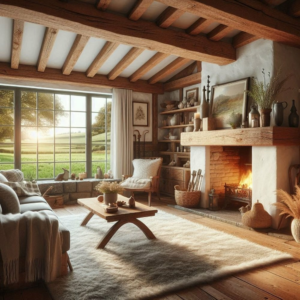
Welcome to the world of rustic farmhouse style. Here, warmth and coziness blend to make a welcoming space.
This style uses natural materials, vintage decor, and classic colors. It’s loved by those wanting comfort and peace in their homes.
Source: https://www.lorddecor.com/blog/warm-farmhouse-living-room
To get this look, focus on the right furniture, colors, and decor. Mixing these elements makes a space feel like a cozy hug.
In this guide, we’ll dive into farmhouse decor. We’ll give you the inspiration to bring this style into your home.
The Essence of Rustic Farmhouse Style
Rustic farmhouse style is all about making a cozy, welcoming space. It feels connected to the past. This design is loved for its warm, inviting vibe and use of natural materials.

Historical Origins and Modern Revival
Rustic farmhouse style comes from rural architecture. It values simplicity and functionality. Today, it blends old charm with modern touches, making homes feel both nostalgic and fresh.
Key historical influences include:– Use of local and natural materials
– Emphasis on functionality
Defining Characteristics and Elements
Rustic farmhouse style is known for its reclaimed wood, vintage decor, and classic looks. It’s warm and inviting, often with exposed beams and brick walls.
Architectural Features
Features of rustic farmhouse style include gabled roofs, big porches, and horizontal lines. These add to the style’s welcoming, earthy feel.
Material Preferences
Material preferences in rustic farmhouse design are natural and durable. Wood and stone are favorites. Reclaimed wood adds character and warmth to any room.
Understanding rustic farmhouse style’s history and key elements helps create authentic, inviting spaces. Adding rustic farmhouse furniture and farmhouse decor enhances the look.
Case Study: The Miller Family Farmhouse Transformation
The Miller family’s home got a big makeover, showing off the rustic farmhouse style. This change made their home look better and work better too.
Project Background and Objectives
The Millers wanted to turn their old home into a cozy rustic farmhouse-style house. They aimed to make a warm space that loved traditional looks but had modern comforts.
They renovated the house, adding rustic farmhouse furniture and decor to get the right feel.
Design Challenges and Solutions
One big challenge was mixing old and new. The design team picked rustic farmhouse furniture that matched the home’s old parts.
They also had to make sure the rustic farmhouse style was everywhere, from the living room to the bedrooms.
![Farmhouse Furniture 101: A Guide to Timeless Style Step into a farmhouse, and you're instantly transported to a world of warmth, comfort, and a touch of nostalgia. The furniture itself plays a starring role in creating this inviting ambiance. But what exactly defines farmhouse furniture? And how can you incorporate this timeless style into your own home? Welcome to Farmhouse Furniture 101, your guide to unlocking the secrets of this enduring design aesthetic. A Look Back: The Roots of Farmhouse Style Farmhouse furniture has its origins in the practical and functional needs of rural living. Early American farmers crafted furniture from readily available materials like wood and wrought iron, prioritizing durability and long-lasting construction. Simple lines, clean silhouettes, and a focus on functionality became hallmarks of this early farmhouse style. Over time, farmhouse design has evolved, incorporating influences from various regions and eras. However, its core principles – practicality, natural materials, and a touch of rustic charm – remain constant. The Hallmarks of Farmhouse Furniture: So, what defines a piece of furniture as "farmhouse"? Here are some key characteristics to look for: Natural Materials:Wood reigns supreme in farmhouse furniture, with warm tones like oak, pine, and walnut creating a sense of connection to nature. Wrought iron accents, woven elements like wicker or rattan, and touches of stone or brick add a rustic charm. Simple Lines and Clean Silhouettes:Farmhouse furniture shuns ornate embellishments and favors clean lines and uncluttered designs. This simplicity creates a sense of spaciousness and timeless elegance. Functionality Reigns Supreme:Form follows function in farmhouse furniture. Every piece serves a purpose, with ample storage space, sturdy construction, and comfortable proportions being key considerations. Distressed Finish:Farmhouse furniture often embraces a slightly distressed finish, showcasing the natural beauty of the wood grain and adding a touch of timeworn character. Beyond the Basics: Substyles of Farmhouse Furniture While the core principles remain consistent, farmhouse furniture encompasses a range of substyles, each with its unique character: Traditional Farmhouse:Imagine classic silhouettes like pedestal dining tables, Windsor chairs with spindles, and high-backed headboards. Natural wood finishes and a touch of worn elegance define this timeless style. Consider incorporating [link to Traditional Farmhouse Furniture on Cottage in the City] pieces to create a space steeped in history and warmth. Industrial Farmhouse:This substyle injects a touch of urban grit into the rustic charm. Think exposed brick walls, metal accents like iron hardware or industrial pendant lights, and reclaimed wood furniture with a weathered finish. Explore our collection of [link to Industrial Farmhouse Furniture on Cottage in the City] pieces to add an edgy touch to your farmhouse haven. Modern Farmhouse:This contemporary take on farmhouse incorporates clean lines, a neutral color palette, and a focus on functionality. Think sleek, streamlined furniture with a nod to rustic elements like woven baskets or natural wood accents. Our selection of [link to Modern Farmhouse Furniture on Cottage in the City] pieces offers a perfect blend of modern sophistication and farmhouse charm. Coastal Farmhouse:Bring the serenity of the seaside into your home with this light and airy substyle. Think distressed whitewashed finishes, woven rattan chairs, and light, breezy fabrics. Incorporate pieces from our [link to Coastal Farmhouse Furniture on Cottage in the City] collection to create a coastal retreat within your home. Choosing the Right Farmhouse Furniture for Your Space Now that you have a better understanding of farmhouse furniture's key characteristics and substyles, it's time to consider how to incorporate it into your own home. Here are some tips: Identify Your Substyle:Do you gravitate towards the classic elegance of traditional farmhouse or the industrial edge of its urban counterpart? Understanding your preferred substyle will guide your furniture choices and create a cohesive look. Consider Functionality:Farmhouse furniture prioritizes functionality. Choose pieces that meet your needs, whether it's a dining table large enough to accommodate gatherings or a comfy sofa perfect for movie nights. Embrace Imperfections:The beauty of farmhouse furniture lies in its imperfections. Don't shy away from distressed finishes or slightly uneven textures – these elements add character and a touch of history to your space. Mix and Match:Farmhouse design thrives on a sense of collected charm. Don't be afraid to mix and match furniture pieces from different substyles or eras as long as they share a common theme of natural materials and clean lines. Bringing Farmhouse Style to Life: Beyond the Furniture While furniture plays a central role, farmhouse style extends beyond just the pieces themselves. Here are some additional elements to consider: Natural Materials:Woven baskets, jute rugs and linen curtains add warmth](https://i0.wp.com/udq.fro.mybluehost.me/wp-content/uploads/2025/07/Farmhouse-Furniture-101-A-Guide-to-Timeless-Style-Step-into-a-farmhouse-and-youre-instantly.jpeg?resize=640%2C640&ssl=1 "Farmhouse Furniture 101: A Guide to Timeless Style Step into a farmhouse, and you're instantly transported to a world of warmth, comfort, and a touch of nostalgia. The furniture itself plays a starring role in creating this inviting ambiance. But what exactly defines farmhouse furniture? And how can you incorporate this timeless style into your own home? Welcome to Farmhouse Furniture 101, your guide to unlocking the secrets of this enduring design aesthetic. A Look Back: The Roots of Farmhouse Style Farmhouse furniture has its origins in the practical and functional needs of rural living. Early American farmers crafted furniture from readily available materials like wood and wrought iron, prioritizing durability and long-lasting construction. Simple lines, clean silhouettes, and a focus on functionality became hallmarks of this early farmhouse style. Over time, farmhouse design has evolved, incorporating influences from various regions and eras. However, its core principles – practicality, natural materials, and a touch of rustic charm – remain constant. The Hallmarks of Farmhouse Furniture: So, what defines a piece of furniture as "farmhouse"? Here are some key characteristics to look for: Natural Materials:Wood reigns supreme in farmhouse furniture, with warm tones like oak, pine, and walnut creating a sense of connection to nature. Wrought iron accents, woven elements like wicker or rattan, and touches of stone or brick add a rustic charm. Simple Lines and Clean Silhouettes:Farmhouse furniture shuns ornate embellishments and favors clean lines and uncluttered designs. This simplicity creates a sense of spaciousness and timeless elegance. Functionality Reigns Supreme:Form follows function in farmhouse furniture. Every piece serves a purpose, with ample storage space, sturdy construction, and comfortable proportions being key considerations. Distressed Finish:Farmhouse furniture often embraces a slightly distressed finish, showcasing the natural beauty of the wood grain and adding a touch of timeworn character. Beyond the Basics: Substyles of Farmhouse Furniture While the core principles remain consistent, farmhouse furniture encompasses a range of substyles, each with its unique character: Traditional Farmhouse:Imagine classic silhouettes like pedestal dining tables, Windsor chairs with spindles, and high-backed headboards. Natural wood finishes and a touch of worn elegance define this timeless style. Consider incorporating [link to Traditional Farmhouse Furniture on Cottage in the City] pieces to create a space steeped in history and warmth. Industrial Farmhouse:This substyle injects a touch of urban grit into the rustic charm. Think exposed brick walls, metal accents like iron hardware or industrial pendant lights, and reclaimed wood furniture with a weathered finish. Explore our collection of [link to Industrial Farmhouse Furniture on Cottage in the City] pieces to add an edgy touch to your farmhouse haven. Modern Farmhouse:This contemporary take on farmhouse incorporates clean lines, a neutral color palette, and a focus on functionality. Think sleek, streamlined furniture with a nod to rustic elements like woven baskets or natural wood accents. Our selection of [link to Modern Farmhouse Furniture on Cottage in the City] pieces offers a perfect blend of modern sophistication and farmhouse charm. Coastal Farmhouse:Bring the serenity of the seaside into your home with this light and airy substyle. Think distressed whitewashed finishes, woven rattan chairs, and light, breezy fabrics. Incorporate pieces from our [link to Coastal Farmhouse Furniture on Cottage in the City] collection to create a coastal retreat within your home. Choosing the Right Farmhouse Furniture for Your Space Now that you have a better understanding of farmhouse furniture's key characteristics and substyles, it's time to consider how to incorporate it into your own home. Here are some tips: Identify Your Substyle:Do you gravitate towards the classic elegance of traditional farmhouse or the industrial edge of its urban counterpart? Understanding your preferred substyle will guide your furniture choices and create a cohesive look. Consider Functionality:Farmhouse furniture prioritizes functionality. Choose pieces that meet your needs, whether it's a dining table large enough to accommodate gatherings or a comfy sofa perfect for movie nights. Embrace Imperfections:The beauty of farmhouse furniture lies in its imperfections. Don't shy away from distressed finishes or slightly uneven textures – these elements add character and a touch of history to your space. Mix and Match:Farmhouse design thrives on a sense of collected charm. Don't be afraid to mix and match furniture pieces from different substyles or eras as long as they share a common theme of natural materials and clean lines. Bringing Farmhouse Style to Life: Beyond the Furniture While furniture plays a central role, farmhouse style extends beyond just the pieces themselves. Here are some additional elements to consider: Natural Materials:Woven baskets, jute rugs and linen curtains add warmth")
Farmhouse furniture guide from acottageinthecity
Essential Rustic Farmhouse Furniture Selection
Rustic farmhouse style brings the outdoors inside. The right furniture sets the mood, making your space warm and inviting. It feels real and welcoming.
Signature Wooden Pieces
Wooden furniture is key in rustic farmhouse decor. It adds warmth and character. Natural wood, often distressed, brings depth and history.
Farmhouse Tables and Hutches
Farmhouse tables and hutches are must-haves. They’re functional and eye-catching. Choose tables from solid wood with a distressed look. Hutches are great for showing off vintage dishes and kitchenware.
Distressed Wood Accents
Distressed wood accents, like reclaimed shelves or wall decor, enhance rustic farmhouse style. They make your space unique and tell a story.
Upholstered Elements for Comfort
Wood is big in rustic farmhouse furniture, but comfort is key. Opt for sofas and armchairs with plush, neutral fabrics. They match the wood and make the room cozy.
Vintage and Repurposed Treasures
Adding vintage or repurposed furniture gives your space a special touch. Look for items with character and history. Old doors, windows, or antique furniture can be refinished or repurposed.
By mixing these elements, you create a rustic farmhouse interior that’s both beautiful and practical. It shows off your style and connection to the past.
Perfecting the Rustic Farmhouse Color Palette
A well-designed color palette is key to rustic farmhouse decor. It creates a harmonious balance, making a house feel like a home.

55 Ideas for the Perfect Modern Farmhouse Color Palette
Foundation Neutrals
Neutrals are the core of any rustic farmhouse color scheme. Shades like white, beige, and soft grays offer a timeless look. They create a calm and inviting atmosphere.
Soft whites and creams are great for walls and trim. They reflect light and make rooms look bigger. For a real touch, use natural materials like wood and stone. They add warmth and texture.
Strategic Accent Colors
While neutrals are the mainstay, accent colors bring depth and character. Earthy tones like sage green, muted blues, and terracottas work well in furniture and decor. They enhance the look and create a cohesive feel.
Color Application Techniques
How you apply colors greatly affects your rustic farmhouse’s look. Think about wall colors, trim choices, and furniture finishes.
Wall Colors vs. Trim Choices
Pair soft wall colors with crisp white trim for a classic look. This contrast highlights your home’s architectural details.
Furniture Finishes
The finish of your furniture can either blend in or stand out. Distressed wood and vintage pieces are key to rustic farmhouse style. They add character and history.
By choosing your colors and application techniques wisely, you can create a rustic farmhouse style that’s both authentic and welcoming.
Authentic Rustic Farmhouse Decor Elements
To get a real rustic farmhouse look, focus on decor that adds warmth and character. Interior designer Joanna Gaines says, “The beauty of rustic farmhouse decor lies in its simplicity and the story it tells.”
Wall Treatments and Architectural Details
Wall treatments are key in setting the rustic farmhouse vibe. Use reclaimed wood for shiplap or paneling to add depth and history. Exposed beams and brickwork also boost the rustic charm.

Lighting Fixtures and Hardware Selections
Lighting and hardware greatly impact the rustic farmhouse look. Choose rustic metal lighting or vintage-style fixtures. For hardware, go for aged or distressed finishes to match your furniture and cabinets.
Textiles and Soft Furnishings
Textiles are crucial for warmth and coziness in a rustic farmhouse. They greatly affect a room’s ambiance.
Natural Fiber Choices
Choose natural fibers like cotton, linen, or wool for upholstery, curtains, and rugs. These materials add texture and authenticity to your decor.
Pattern Mixing Strategies
Mixing patterns can be tricky, but in rustic farmhouse decor, it’s about balancing textures and scales. Mix stripes with florals or plaids with solids for a layered look. Keep a cohesive color palette to tie patterns together.
By using these authentic rustic farmhouse decor elements, you can make a warm and inviting home. It will feel cozy and stylish at the same time.
Living Room Design Principles and Results
The living room is the heart of a home, and rustic farmhouse design really comes alive here. Signature elements include reclaimed wood furniture, vintage decor, and plush textiles. For example, a reclaimed wood coffee table can be a standout piece. Comfortable, oversized sofas in neutral tones make the space cozy.

Kitchen and Dining Space Transformations
The kitchen and dining areas are key in a rustic farmhouse, as they’re where people gather. Farmhouse sinks, vintage lighting, and rustic wooden beams can make these spaces special. In the kitchen, natural materials like stone and wood add warmth.
In the dining area, a big, rustic table is perfect for family meals and gatherings.
Bedroom and Bathroom Approaches
In bedrooms and bathrooms, rustic farmhouse style creates calm, relaxing spaces. For bedrooms, soft color palettes, vintage furniture, and cozy textiles are key. In bathrooms, natural materials and vintage fixtures add to the rustic charm.
Sleep Sanctuary Creation
Making a sleep sanctuary is more than just having a bed; it’s about creating a peaceful space. Soft lighting, comfortable bedding, and calming colors help make it restful. In a rustic farmhouse bedroom, vintage dressers or plush area rugs add to the cozy feel.
Bathroom Material Selections
Choosing the right materials is key in bathrooms. Natural stone, reclaimed wood, and vintage fixtures enhance the rustic look. A freestanding tub in front of a window can be a highlight, while a reclaimed wood vanity adds warmth and character.

Industrial-Farmhouse Fusion
Mixing rustic farmhouse with industrial design creates a bold look. Exposed brick, metal accents, and reclaimed wood are key. They blend the cozy feel of farmhouse with the cool vibe of industrial.
Modern Farmhouse Balance
Combining rustic farmhouse with modern style makes a room feel both old and new. This mix uses clean lines, minimal ornamentation, and modern rustic farmhouse furniture. It creates a stylish yet warm space.
Coastal and Bohemian Influences
Rustic farmhouse style can also be mixed with coastal or bohemian elements. This creates a welcoming and unique space. Think about changing textures and colors to fit these styles.
Texture and Color Adaptations
Adding different textures like woven fibers, natural woods, and soft linens makes a room interesting. For colors, use whites, blues, and greens for a coastal feel. Earthy tones and bright colors add a bohemian vibe.
Focal Point Strategies
Creating focal points is key when mixing styles. Use statement pieces of rustic farmhouse furniture or decor to catch the eye and tie the room together.
By carefully mixing rustic farmhouse style with other designs, homeowners can create a space that’s both personal and stylish. This makes their home truly special.
Budget-Conscious Rustic Farmhouse Transformations
You don’t have to spend a lot to make your home look like a rustic farmhouse. A bit of creativity and smart shopping can turn your space into a cozy retreat without costing a lot.
High-Impact DIY Projects
DIY projects are a smart way to add farmhouse decor without spending a lot. Try making a reclaimed wood headboard or a vintage window chandelier. These projects save money and make your space special.
Strategic Investment Pieces
While DIY is cheap, some items are worth spending on. Choose quality over quantity for things like a solid wooden dining table or a comfy sofa. These strategic investment pieces are the heart of your rustic farmhouse look.
Thrifting and Upcycling Success Stories
Thrifting and upcycling are great for finding unique decor. Thrift stores and garage sales often have hidden gems. For example, an old ladder can become a bookshelf, or vintage mason jars can be turned into pretty vases.
Furniture Restoration Techniques
Restoring old furniture adds character to your home. You can strip old finishes, repaint, or reupholster to give new life to vintage pieces. With some effort, thrift store finds can become rustic farmhouse treasures.
Decor Item Transformations
Transforming decor items is just as exciting. You can turn old tin cans into planters or make a gallery wall with vintage frames. These small projects can greatly enhance your home’s look.
Embracing Rustic Farmhouse Living: Lessons from Our Case Studies
The case studies in this guide show the beauty of rustic farmhouse style. They prove how it can fit different homes and tastes. By looking at the Miller Family Farmhouse and others, we learn how to bring rustic farmhouse into our homes.
Rustic farmhouse furniture is key to this style. It uses natural materials and vintage items. Choosing wooden and upholstered pieces makes a space warm and welcoming. Adding vintage signs, metalware, and natural fabrics also brings character to your home.
To truly enjoy rustic farmhouse living, mix different styles. This includes industrial and modern pieces. By following the guide’s tips, you can mix rustic farmhouse with other styles. This way, you get a space that’s both unique and reflects your taste.


