
Confused about the difference between modern and contemporary interior design? You’re not alone. These terms are often used interchangeably, but they represent distinct design philosophies with unique characteristics. Understanding the nuances between modern vs contemporary interior design can help you make informed decisions when decorating your home. In this comprehensive guide, we’ll explore the key differences, from historical context to design elements, helping you identify which style resonates with your aesthetic preferences.
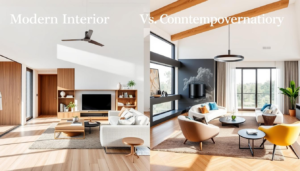
Modern design (left) features clean lines and natural materials, while contemporary design (right) incorporates current trends and mixed textures
Understanding Modern vs Contemporary Interior Design: The Basics
Before diving into the specifics, let’s clarify the fundamental difference between these two popular design styles. Modern interior design refers to a specific historical period from the early to mid-20th century. It embraces clean lines, functional spaces, and a “less is more” philosophy. Contemporary design, on the other hand, is constantly evolving and reflects current trends and preferences. It’s more fluid and eclectic, incorporating elements from various styles while staying current with today’s design innovations.
“Modern design has a specific time period with defined characteristics, while contemporary design is ever-changing, representing what’s trending right now in the design world.”
This distinction is crucial because it affects everything from furniture selection to color palettes and material choices. Let’s explore these differences in detail to help you determine which style aligns with your vision for your home.
Historical Context: When Did These Styles Emerge?
Modern Interior Design: A Defined Era
Modern interior design emerged in the early 20th century, specifically from the 1920s to the 1950s. It was heavily influenced by the Bauhaus movement in Germany and Scandinavian design principles. Key figures like Ludwig Mies van der Rohe, Le Corbusier, and Frank Lloyd Wright championed the idea that “form follows function,” prioritizing simplicity and practicality over ornate decoration.
The post-World War I era saw a rejection of the excessive ornamentation of previous design periods. Instead, modernists embraced industrial materials and celebrated the beauty of clean, unadorned spaces. This approach was revolutionary at the time and continues to influence interior design today.
Contemporary Interior Design: Always Evolving
Unlike modern design, contemporary interior design doesn’t belong to a specific time period. It’s constantly evolving, reflecting current trends, technologies, and preferences. What was considered contemporary in the 1990s differs significantly from contemporary design today.
Contemporary design began taking shape in the late 20th century and continues to develop. It borrows elements from various styles, including modernism, minimalism, and even traditional design, creating a unique blend that feels current and fresh. This adaptability is what makes contemporary design so appealing to many homeowners—it can incorporate new ideas while maintaining a cohesive look.
Design Philosophy: Minimalism vs. Fluidity

Modern Design: Embracing Minimalism
Modern interior design embraces minimalism and functionality. It’s characterized by clean lines, uncluttered spaces, and a focus on practicality. The philosophy behind modern design is that every element should serve a purpose—there’s no room for unnecessary decoration or excess.
This approach creates spaces that feel open, airy, and uncluttered. Furniture is often elevated off the floor to create a sense of lightness and space. Built-in storage solutions help maintain the clean aesthetic by reducing visual clutter. The overall effect is one of simplicity and intentionality.
Contemporary Design: Celebrating Fluidity
Contemporary design is more fluid and adaptable. While it often incorporates minimalist elements, it’s not bound by strict rules or philosophies. Contemporary spaces can feature a mix of styles, textures, and periods, creating interiors that feel personal and unique.
This design approach celebrates innovation and isn’t afraid to experiment with new materials, technologies, and ideas. Contemporary spaces often feel more relaxed and comfortable than strictly modern interiors, with a focus on creating environments that reflect current lifestyles and preferences.
Materials: Traditional vs. Innovative

Modern Design Materials
Modern interior design favors natural materials that showcase their inherent beauty. Common materials include:
- Wood (particularly teak, walnut, and oak)
- Leather
- Polished metal (chrome and steel)
- Glass
- Concrete
These materials are often used in their natural state, with minimal processing or embellishment. The focus is on highlighting the material’s natural characteristics rather than disguising or altering them. For example, wood grain is celebrated rather than painted over, and concrete might be polished but left exposed.
Contemporary Design Materials
Contemporary interior design embraces a wider range of materials, including innovative and sustainable options. Common materials include:
- Mixed metals (brass, copper, brushed nickel)
- Recycled and composite materials
- Sustainable woods and bamboo
- Glass (often used in unexpected ways)
- Textured fabrics and synthetic materials
Contemporary design isn’t afraid to mix materials, creating interesting contrasts and textures. It also embraces technological innovations, such as smart materials that change properties based on environmental conditions or integrated technology that enhances functionality.
Color Palettes: Neutral vs. Bold Contrasts

Modern Color Schemes
Modern interior design typically features a neutral color palette with occasional bold accents. Common color choices include:
Base Colors:
- White
- Beige
- Gray
- Black
- Brown (from natural wood)
Accent Colors:
- Primary colors (red, blue, yellow)
- Earth tones
- Occasional bold hues used sparingly
The emphasis is on creating a clean, uncluttered look where the architecture and furniture take center stage. Color is often used strategically to highlight specific elements or create focal points within the space.
Contemporary Color Schemes
Contemporary interior design embraces a broader color palette, including both neutrals and bold hues. Common color choices include:
Base Colors:
- Whites and off-whites
- Grays (from light to charcoal)
- Black
- Taupe and greige
Accent Colors:
- Jewel tones (emerald, sapphire, ruby)
- Metallics (gold, copper, bronze)
- Trending colors that change with fashion
Contemporary spaces often feature high-contrast color schemes, such as black and white with bold accent colors. The palette might change over time as color trends evolve, allowing homeowners to update their spaces without a complete redesign.
Furniture Styles: Clean Lines vs. Eclectic Blends

Modern Furniture Characteristics
Modern furniture is characterized by clean lines, minimal ornamentation, and a focus on function. Key features include:
- Low-profile pieces with straight, clean lines
- Exposed legs that elevate furniture off the floor
- Natural materials like wood, leather, and metal
- Minimal cushioning and tailored upholstery
- Built-in functionality and storage solutions
Iconic modern furniture pieces include the Barcelona Chair by Ludwig Mies van der Rohe, the Eames Lounge Chair, and the Noguchi Coffee Table. These pieces are still produced today and are considered design classics.

Contemporary Furniture Characteristics
Contemporary furniture is more diverse and eclectic, reflecting current trends and technologies. Key features include:
- Curved and organic shapes alongside straight lines
- Mixed materials and unexpected combinations
- Comfort-focused designs with plush upholstery
- Statement pieces that serve as focal points
- Innovative features like integrated technology
Contemporary furniture often incorporates elements from various design periods, creating unique pieces that feel current and fresh. Floating elements, such as wall-mounted cabinets and cantilevered desks, are popular in contemporary interiors.

Modern vs Contemporary Interior Design: Side-by-Side Comparison
| Design Element | Modern Interior Design | Contemporary Interior Design |
| Time Period | Early to mid-20th century (1920s-1950s) | Present day, constantly evolving |
| Design Philosophy | Form follows function, minimalism | Fluid, adaptable, trend-responsive |
| Lines and Shapes | Clean, straight lines, geometric forms | Mix of curved and straight lines, organic shapes |
| Materials | Natural wood, leather, polished metal, glass | Mixed metals, sustainable materials, innovative composites |
| Color Palette | Neutral with occasional primary color accents | Neutrals with bold contrasts, trending colors |
| Furniture | Low-profile, elevated, minimal ornamentation | Eclectic mix, comfort-focused, statement pieces |
| Iconic Examples | Eames Chair, Barcelona Chair, Noguchi Table | Floating staircases, mixed material furniture, smart home integration |
Common Misconceptions About Modern vs Contemporary Design
Misconception: Modern and Contemporary Mean the Same Thing
Perhaps the most common misconception is that modern and contemporary are synonymous terms. As we’ve explored, modern design refers to a specific historical period with defined characteristics, while contemporary design is ever-evolving and reflects current trends.
Misconception: Modern Design Is Cold and Uninviting
Many people assume that modern interiors are cold, sterile, and uncomfortable. While modern design does embrace minimalism, it also incorporates natural materials like wood and leather that add warmth and texture. Well-designed modern spaces can feel inviting and comfortable while maintaining clean lines and uncluttered surfaces.
Misconception: Contemporary Design Is Always Trendy and Will Look Dated Quickly
Some worry that contemporary design will quickly look outdated as trends change. While contemporary design does incorporate current trends, well-executed contemporary interiors focus on timeless elements with trendy accents that can be easily updated. This approach creates spaces that can evolve over time without requiring a complete redesign.
Misconception: Modern Design Doesn’t Use Color
Another common misconception is that modern design only uses black, white, and gray. While neutrals do form the foundation of many modern interiors, pops of bold color—particularly primary colors like red, blue, and yellow—are classic elements of modern design, inspired by artists like Piet Mondrian and movements like De Stijl.
How to Choose Between Modern and Contemporary for Your Home

Deciding between modern and contemporary interior design depends on your personal preferences, lifestyle, and the architecture of your home. Here are some factors to consider:
Consider Your Lifestyle
Think about how you use your space and what’s important to you. If you value simplicity, functionality, and timeless design, modern style might be the perfect fit. If you prefer flexibility, comfort, and the ability to incorporate new trends, contemporary design could be more suitable.
Assess Your Home’s Architecture
Consider the architectural style of your home. Mid-century modern or minimalist homes naturally lend themselves to modern interior design. Newer constructions with unique architectural elements might pair better with contemporary design. However, both styles can be adapted to various architectural contexts.
Start with Key Pieces
Begin with foundational furniture pieces that reflect your chosen style. For modern interiors, invest in classic pieces with clean lines and natural materials. For contemporary spaces, look for comfortable, on-trend items that make a statement while remaining versatile.
Mix and Match
Remember that you don’t have to commit strictly to one style. Many successful interiors blend elements of both modern and contemporary design. You might prefer the clean lines of modern furniture with the bold color contrasts of contemporary design, or vice versa.

Practical Examples: Modern vs Contemporary in Different Rooms
Living Room

Modern Living Room Features:
- Low-profile sofa with clean lines
- Iconic chairs (Eames, Barcelona)
- Glass and wood coffee table
- Minimal accessories
- Neutral palette with one or two bold accents
Contemporary Living Room Features:
- Comfortable, plush seating
- Statement lighting fixture
- Mixed material coffee table
- Textured throw pillows and rugs
- Bold art pieces or gallery wall
Kitchen

Modern Kitchen Features:
- Flat-panel cabinets in natural wood or white
- Minimal or hidden hardware
- Open shelving
- Integrated appliances
- Simple backsplash in neutral tones
Contemporary Kitchen Features:
- Mixed cabinet materials and finishes
- Statement lighting and fixtures
- Bold backsplash or countertops
- Smart appliances and technology integration
- Innovative storage solutions
Bedroom

Modern Bedroom Features:
- Platform bed with clean lines
- Minimal nightstands
- Built-in storage
- Natural wood elements
- Simple, high-quality bedding
Contemporary Bedroom Features:
- Statement headboard
- Mixed material nightstands
- Layered, textured bedding
- Bold accent wall or wallpaper
- Unique lighting fixtures
Conclusion: Finding Your Perfect Style

Understanding the differences between modern vs contemporary interior design is the first step toward creating a home that reflects your personal style and meets your functional needs. Modern design offers timeless elegance with its clean lines, natural materials, and functional approach. Contemporary design provides flexibility and the opportunity to incorporate current trends while creating a space that feels fresh and unique.
Remember that design rules are meant to be guidelines, not strict limitations. Many beautiful interiors incorporate elements from both styles, creating spaces that are both timeless and current. The most important aspect of interior design is creating a home that feels comfortable, functional, and authentic to you.
Whether you lean toward the clean simplicity of modern design, the eclectic flexibility of contemporary style, or a thoughtful blend of both, the key is to make intentional choices that create a cohesive and inviting space. With the knowledge you’ve gained from this guide, you’re well-equipped to make informed decisions about your interior design journey.


